a change in time

musings on behavioural change – the small stuff and the big stuff.


11 Comments

When what you need is just around the corner

It’s been a few years since we have planted a successful veggie garden. This year we tentatively set up a couple of raised beds and purchased the minimum amount of seedlings and I’m happy to report that so far most of our babies are growing successfully. (Our biggest threat has been an earwig infestation which has resulted in me going out each night with a torch and flicking the little creatures off our tasty plants.)

These are the three cherry tomato bushes we bought and they are all still alive!

These are the three cherry tomato bushes we bought and they are all still alive!

I felt like I needed a mentor, my confidence, though improved, was still smarting from previous crop failures. Our dear friend Bruno visited last week, which reminded me that his father lives around the corner and is an enthusiastic gardener who supplements his diet with an impressive spread of vegetables grown in his back yard. (Dom and ‘the boys’ were born in  S.Angelo in Italy where the family had owned land and a fine cart pulled by the family’s two cows. Dom has even made a small replica of the ‘cows and cart’.)
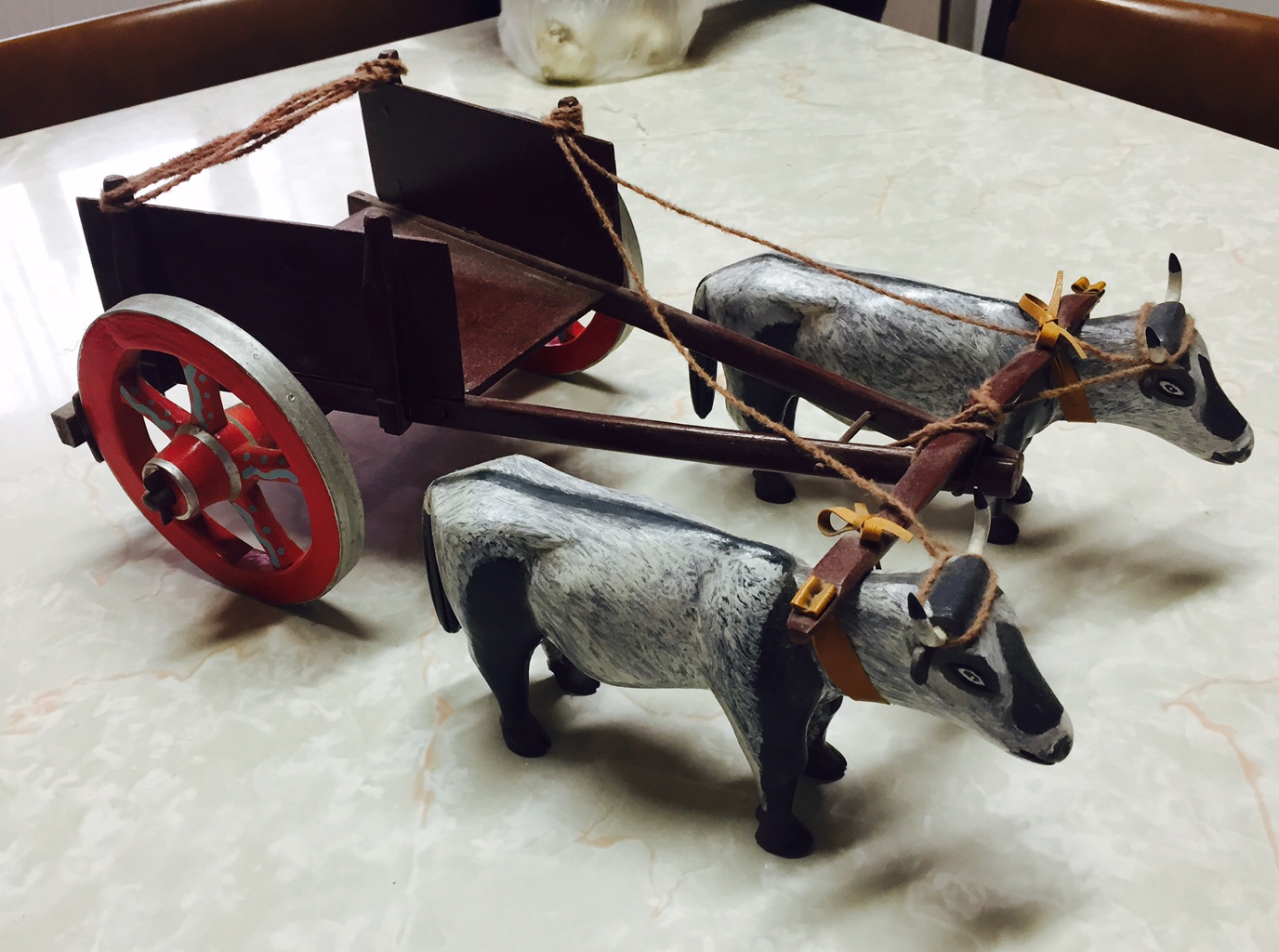
Bruno and Tony told me that Dom is a bit of a cow whisperer.

Bruno and Tony told me that Dom is a bit of a cow whisperer.

I asked Bruno if he thought his father would be willing to help me, and suddenly it was all organised! We agreed to meet up over the weekend so I ventured over with a list of questions in mind. Of course I have a heap of books on the subject and I could just ‘google it’ but I have tried these methods before and they just haven’t stuck so I decided that the only option was to spend time with a real live experienced gardener. Fortunately Bruno and his brother Tony were happy to translate for me, as well as offer a wealth of information from their own experiences as gardeners.

Here we see the Annetta menfolk checking out the area where the seedlings are grown.

Here we see the Annetta menfolk checking out the area where the seedlings are grown.

The beans caught my eye immediately, the tendrils happily winding themselves around bamboo sticks that Domenico grew in his original Reservoir home, around twenty years ago. These beans were in full sun for most of the day and yet Dom was not at all concerned that they might get damaged on freakishly hot days, he simply waters them morning and evening and this is enough for them to make it through the blistering heat.
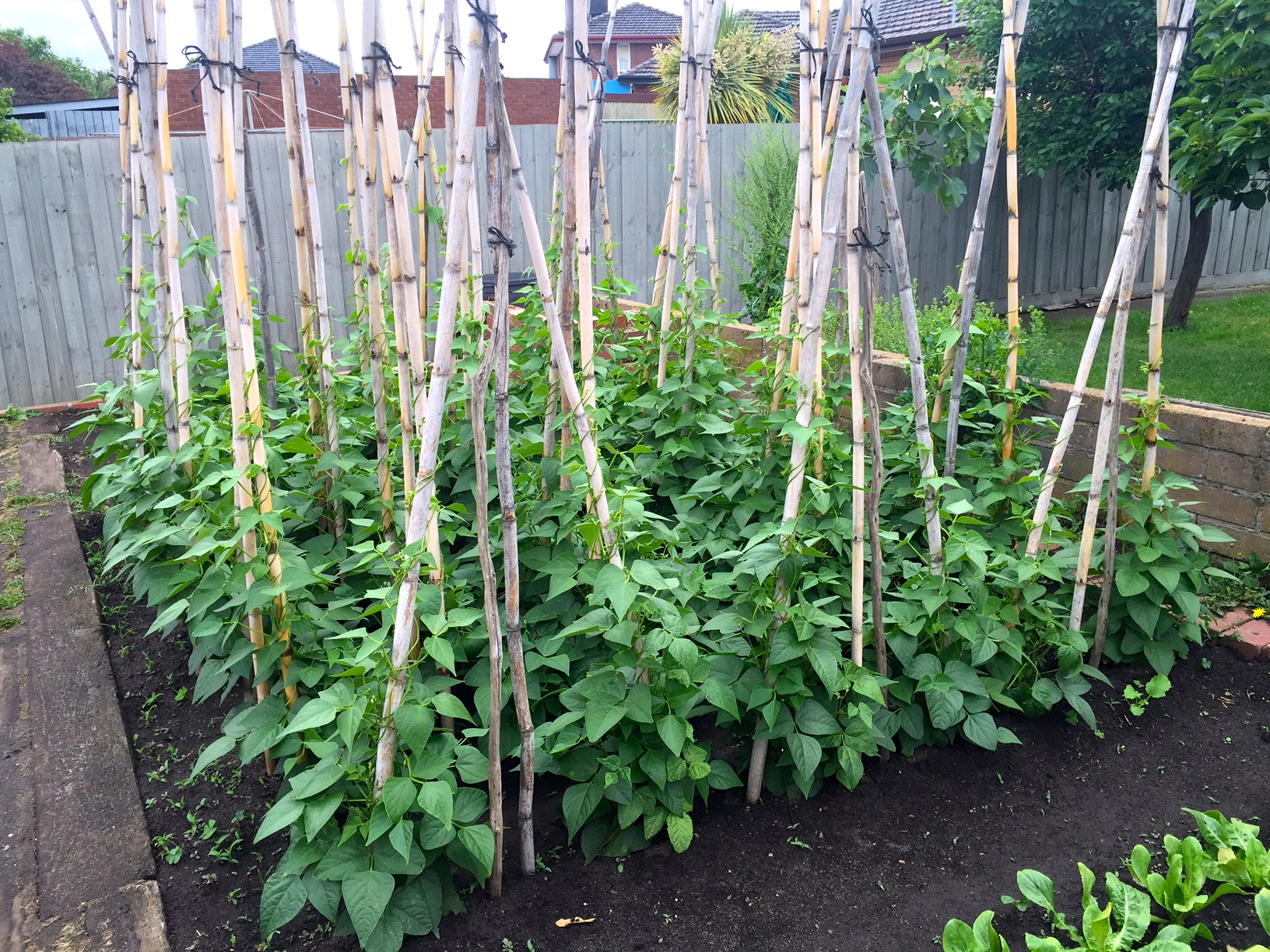
I would sell my soul to have beans growing in our garden that look like this!

I would sell my soul to have beans growing in our garden that look like this!

He rotates his crops, with Bruno and Tony commenting that one year the tomatoes will be planted where the beans are and the next year it will be vice versa. To keep the soil enriched he uses dynamic lifter; in earlier years he would buy bags of goat manure but as the years pass it has become easier to follow this new regime.
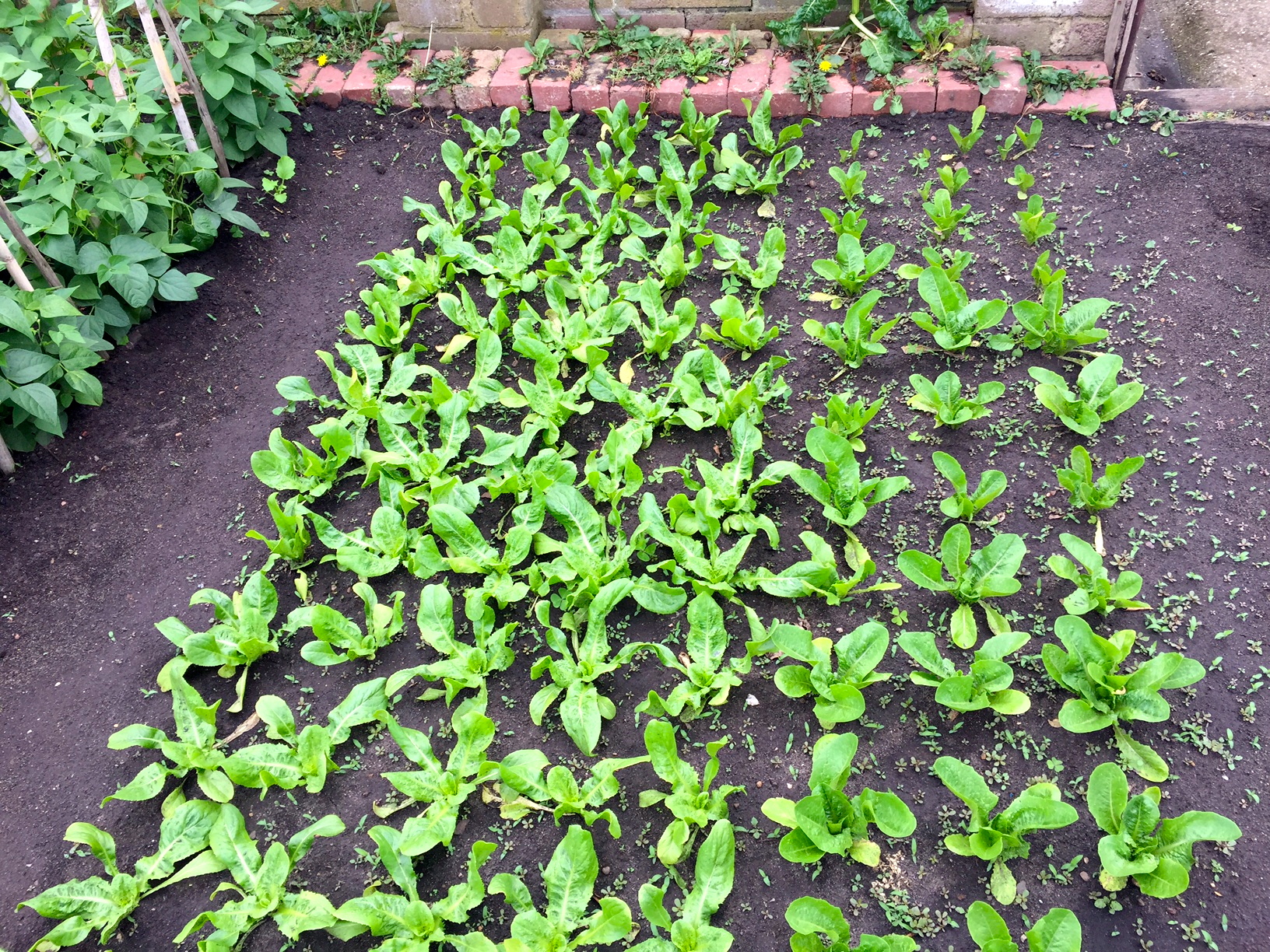
One side of the bed is a cos type lettuce, the other is a scariola, more suitable for cooking.

One side of the bed is a cos type lettuce, the other is a scariola, more suitable for cooking.

He saves his seeds from year to year and has a special spot for growing them. I was fortunate enough to take away some cucumber seeds and some lettuce and tomato seedlings, and garlic and don’t forget the bottle of homemade wine! The most amazing thing that occurred was he gave me a very special tool used for making holes in the soil for the seedlings. I am honoured to have received such a gift.

Bruno and Tony joked that they hadn't been presented with one of these. Maybe it's because I look like I need all the help I can get!

Bruno and Tony joked that they hadn’t been presented with one of these. Maybe it’s because I look like I need all the help I can get!

I asked him about how he deals with ‘pests’. While he does rely on snail and slug pellets, he has an ingenious way of trapping them – he places the pellets under a piece of metal in a grassy area at the edge of his beds and the snails and slugs make their way to this little lean-to, gorging themselves on pellets, thus leaving the seedlings for human consumption.
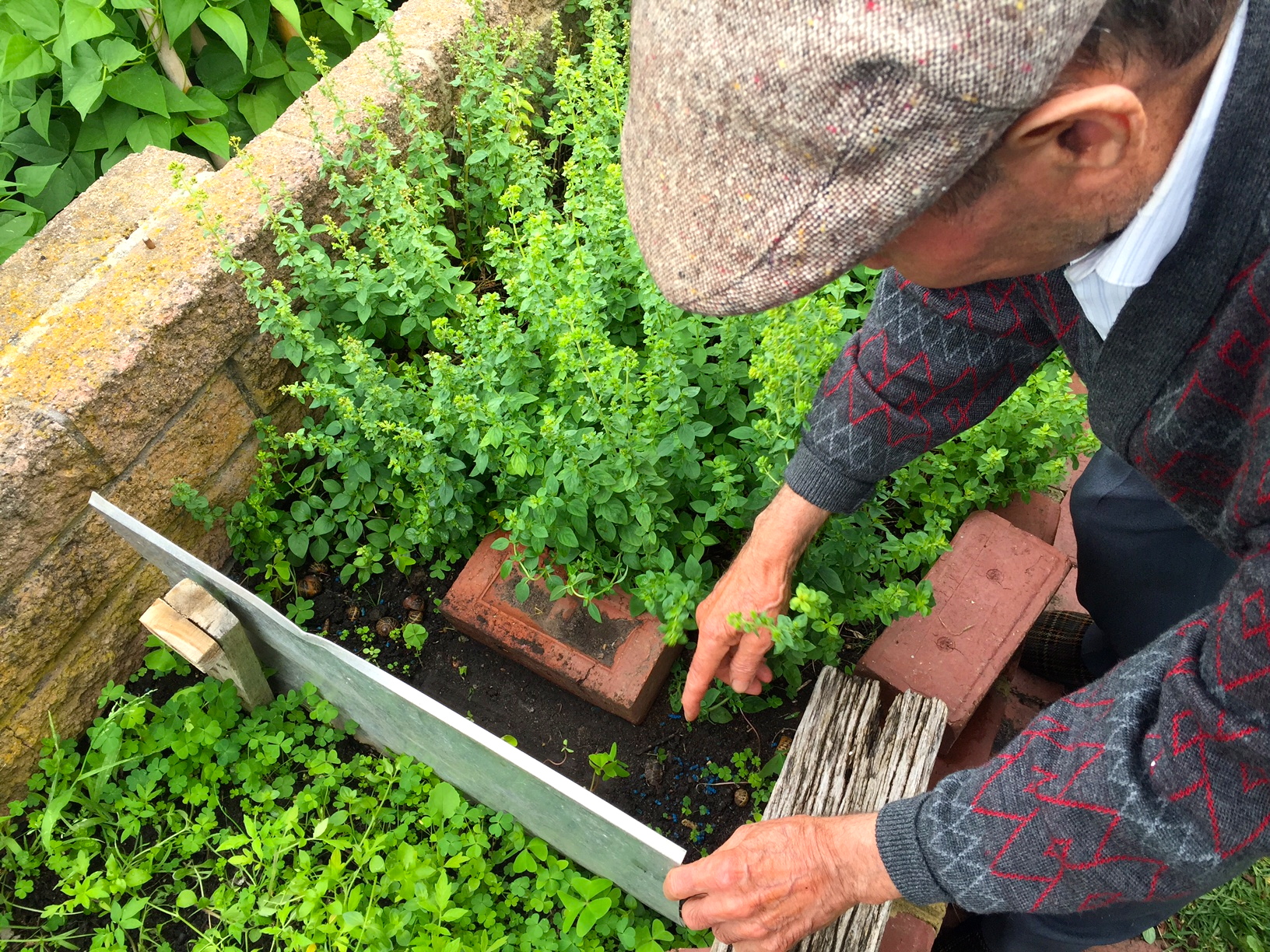
Come on snails and slugs, I have built a special home for you!

Come on snails and slugs, I have built a special home for you!

He had also planted cucumbers, tomatoes, two kinds of leafy greens and there was a fine crop of garlic that caught my eye.

Domenico kindly gave me some garlic to grow, even though the planting season has passed. I'll see how I go!

Domenico kindly gave me some garlic to grow, even though the planting season has passed. I’ll see how I go!

I envied his confidence in his ability to grow his own food and thought I should definitely take a leaf out of his book.

It was a humbling experience and I hope to go back again, with my next visit being when it is time to plant the broad beans. I will take this opportunity to promise that I will take care of our new family of seedlings to the best of my ability, committing to being a confident and consistent carer.


4 Comments

the dilemma with special things

For most of my life I have gained great pleasure from objects that hold special meaning for me. Ranging from things as everyday as my first recipe book or an essay from high school, to family heirlooms like a Bible left to me by my grandmother and a vase that once belonged to my mother’s sister, who died seventy years ago.

memorabilia

The longer we live the more possessions we acquire. Many of these items hold special memories. Eventually there is nowhere left to store these precious items. (I still haven’t been able to sort through boxes of my parents’ possessions, which have been in our shed for nine years!)

one_box

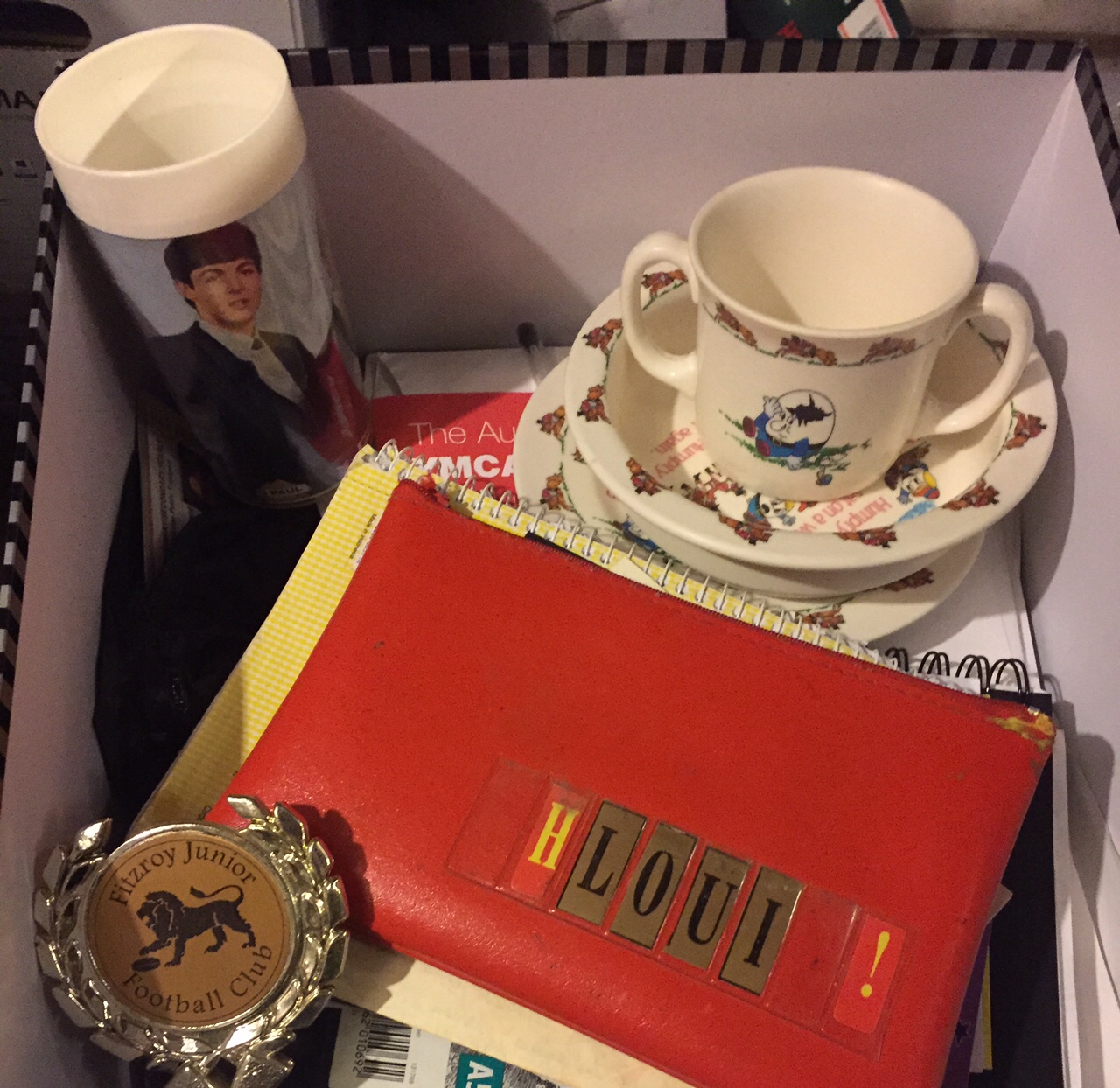
Way back in March, around the time of our son Louis’ birthday, we came across a few items we had kept for him from the early years. You know the kinds of things I’m talking about, his first cereal bowl and mug, a football trophy, a pencil case from primary school. I have always assumed that our sons would want these memories from their childhood.

louis_pic

Around the same time I read an article entitled Stuff it: Millennials nix their parent’s treasures. As I read through the article, I felt like the journalist was addressing me personally. Here’s a taste of what had me squirming in my seat:

“As baby boomers, born between 1946 and 1964, start cleaning out attics and basements, many are discovering that millennials, born between 1980 and 2000, are not so interested in the lifestyle trappings or nostalgic memorabilia they were so lovingly raised with.”

How did that happen! Once I got over my reaction, which ran something along the lines of, ‘how will memories be passed on if the items that hold them are not valued’, it occurred to me that our need or desire to surround ourselves with keepsakes can quickly become ‘unsustainable’. As I look around our house I am aware of stories attached to every item. It doesn’t take long before I feel transported to another time, another place. I can relate to the hoarder reality TV shows where a person sees value in everything they have collected and can’t bare to let go of anything.

Another quote from the article:

They are living their lives digitally through Instagram and Facebook and YouTube, and that’s how they are capturing their moments. Their whole life is on a computer; they don’t need a shoebox full of greeting cards.

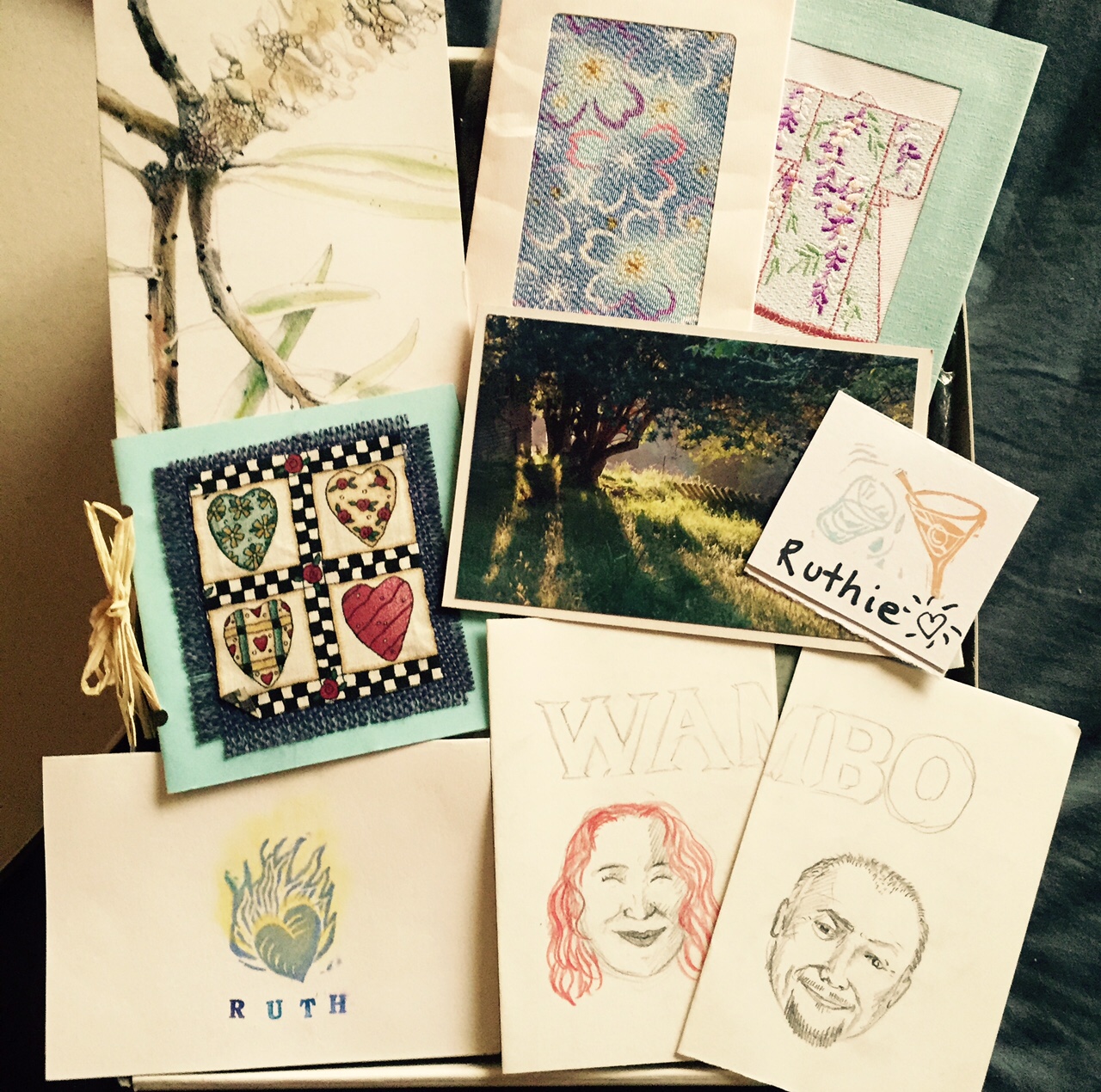
Okay, so I have quite a few shoeboxes full of greeting cards, dating back thirty or so years.

cards_v02

Earlier in the year I read an article about Marie Kondo, who has written a book that could possibly solve all of my problems. I told my sister, Jann, about the book. She actually bought it and read it and has since offered me some advice on how to deal with all of those treasured cards. From Jann, “the Japanese book on tidying your home and life recommends getting rid of things like old cards that people have given you. She says that they have served their purpose once they have been given.

I think I will have to take it slowly. Meanwhile I will ponder why the thought of letting go of things from the past feels so difficult. I envy the next generation if they really don’t feel so attached to their possessions. I’m working on not being so attached. I bet you’re thinking, she’s going to have to let go of them sooner or later, and I agree. Let’s see if I can beat the reaper.


1 Comment

My driving addiction

I know I have an addiction to driving because I looked up the definition of ‘addicted’ and this is what it said: compulsively or physiologically dependent on something habit-forming. Because of this addiction, you cannot trust me to write anything that is unbiased or rationally argued, but I will have a go anyway.

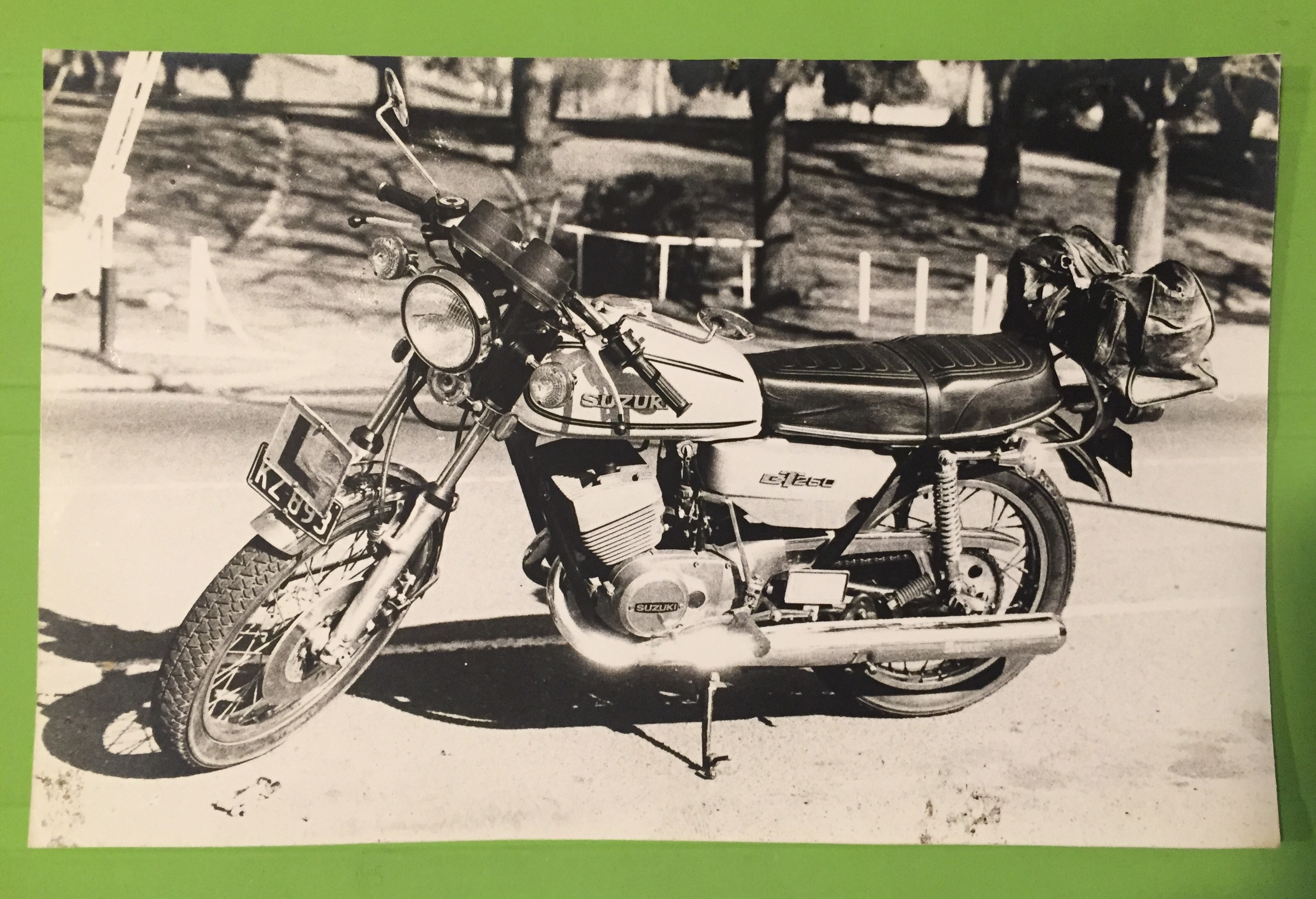
My first ‘set of wheels’ was a Suzuki GT250. It had a shiny silver tank with a black stripe.

gt250

You can tell this photo is from the seventies because it’s a black and white print that I developed myself.

For those of you who rode motorcycles in your teens and twenties you may remember that sense of feeling immune to accidents and injury. I rode motorcycles exclusively for three years before the trip across the Westgate from my flat in Toorak to Altona North High School became less like fun and besides, I could afford to buy a car. While I continued to purchase and ride motorcycles, my preference for driving grew as the years passed.

During the first unit of the Graduate Certificate in Sustainability, our lecturer asserted that ‘for every flashlight you have on someone, there is one on you’. I secretly knew that this flashlight was aimed at my driving addiction. Anthony told us about Frank Fisher’s acronym for ‘people like me’ – DODOs: driver only, driver owned.

Sometimes I wish I never took it up. It’s much easier to resist something if you’ve never tried it. I’d like to think that the fact that neither of my brothers have cars and our youngest son has so far avoided the habit, that I am let off the hook. A kind of family carbon offset.

Would you like to see a photo of my current object of desire? Of course you do!

car

My mother calls my Subaru ostentatious, I call her ‘subi’. (Original!)

Did you see that article in The Age in which they referred to ‘the middle ground between vego and paleo’? Of course someone has come up with a name for that middle ground – reducetarian. The description appeals to me because, even though I am nowhere near going cold turkey on driving, before I jump in the car, I now ask myself if I really need to, and I avoid ‘driver only’ travelling as much as possible.

Why bother? Because the small changes we make everyday contribute towards creating a more sustainable way of living.

After all, the ‘motto’ is Reduce, Reuse, Recycle for a reason. Wish me luck!


2 Comments

Worms are people too!

Many years ago my brother Rod gave me a CERES worm farm for Christmas; a very generous present. (Thanks Rod!)

With the worm farm installed in our backyard, I would no longer need to toss our food scraps into the bin. Yay for me! Okay, I was a little smug about how virtuous I now would be. Take that landfill!

That’s when I discovered that being the owner of a worm farm is not as easy as it sounds. Worms need food. And they die, in the heat, by the thousands! Too much responsibility!!

After that hot summer, back in 2009, when our first family of worms frizzled and fried, tossing food scraps and leftovers in the bin didn’t seem so bad after all. Until I enrolled in that damn sustainability course. That’s when the ghost of worms past started haunting me. ‘Did we die for nought?’.

shade Peter fashioned this shade tent to protect the new batch of worms from certain death. They are very grateful.

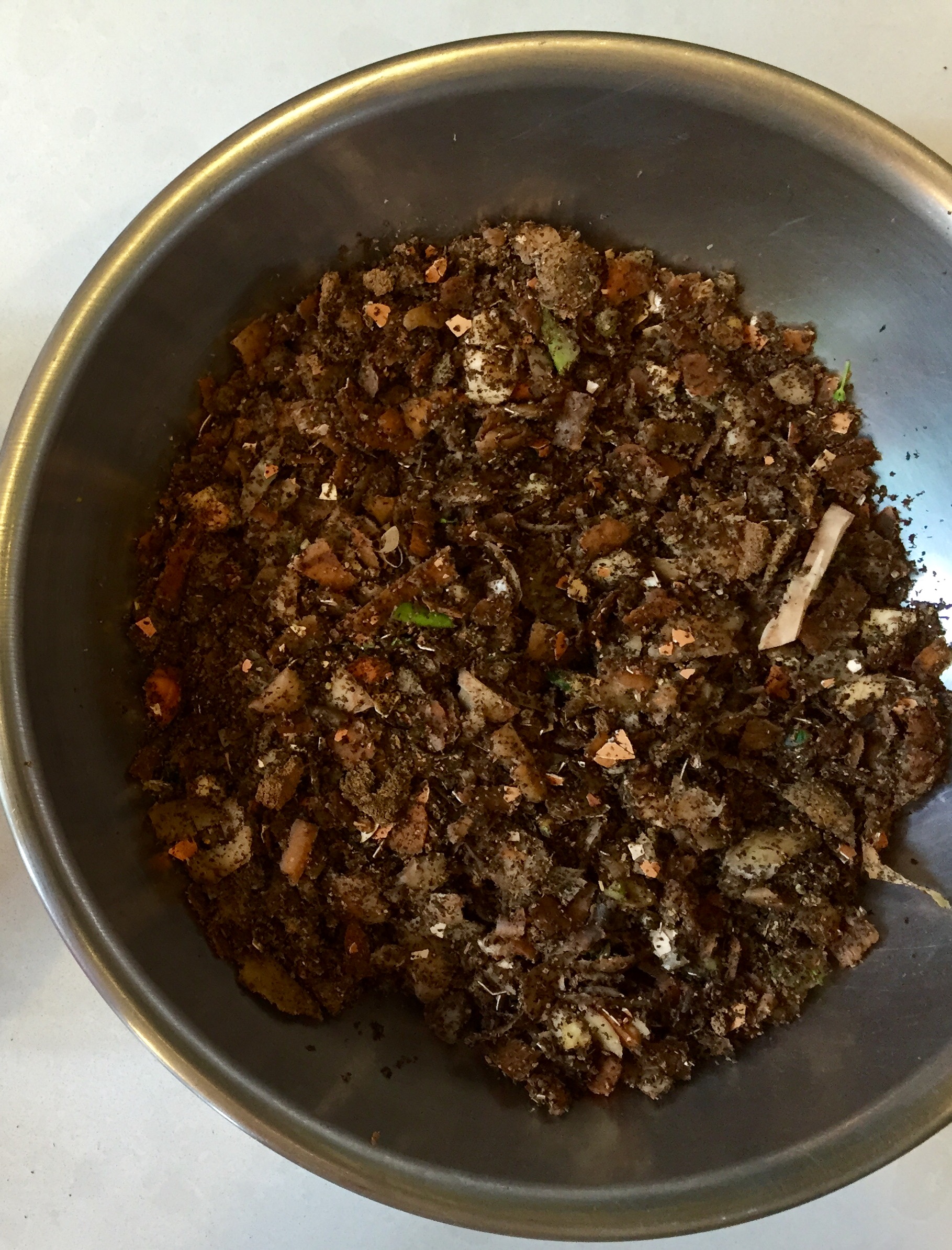
Less than eight weeks into the Swinburne course, Peter and I went to CERES and purchased a box of worms. I was ready and willing to try again. Avoiding the heat wasn’t the only change we needed to initiate, there was the problem of the food not breaking down fast enough. The very helpful nursery attendant at CERES mentioned that it helps to cut the food into small pieces as it is easier for the worms to break it down. Why didn’t I think of that? Worms have very tiny mouths!

worm food Yummy worm food – a selection of carrot and potato peelings, some egg shells and loose tea.

One day, while peering at the worms, it occurred to me that I am a farmer, a worm farmer. I have a responsibility for the worms. It is a symbiotic relationship. I need the worms to dispose of our food scraps and they need me to make sure their conditions are met – they need food, and shelter from the elements.

I’ve learnt a lot about myself from the worms. How fear of failure can paralyse even the best of intentions. Every time I open the lid to spread a new batch of food, I still get that tight feeling in my stomach. Will they still be alive? So far, they have survived, and I breathe a sigh of relief. I love worms.


1 Comment

Sometimes you need to have a chat with yourself

Have you seen Peter Watkins’ film, ‘The War Game’? I must have seen it in 1976, eleven years after it was originally screened. In case you haven’t seen it, here is a brief synopsis from IMDB: “a fictional, worst-case-scenario docudrama about nuclear war and its aftermath in and around a typical English city.”

While the threat of nuclear war was not imminent in the mid-to-late seventies in suburban Melbourne, the authentic representation of what might occur if such an event was to happen left such a strong imprint on my subconscious that I often dreamt of being in the midst of this kind of devastation. Then the Cold War ended and my secret dread lifted.

Now, almost 40 years later, I have once again been having those uneasy feelings about what the future may hold.

After my last post, I have noticed that I have been wondering if there is any use making changes in our lives, large or small, with the intention of treading more lightly on the Earth. I consider myself to be an optimistic person so I was surprised to discover such a thought swimming around in my head.

As the Australian Federal Government moves further away from demonstrating a commitment to addressing Climate Change, as ‘Terrorists and terrorism’ become frequent ‘visitors’ in most newspaper headlines, and we are constantly reminded of the spread of Ebola and the apparent lack of will to stop it displayed by Western countries, I guess it is no wonder I’ve been feeling a bit ‘out of sorts’ of late.

I’ve had to have a chat with myself and gave myself some advice:

1. Don’t take yourself, life, the news, etc. too seriously.

2. Human beings throughout history have thought that ‘the end of days’ is nigh. So far, it hasn’t happened.

3. Get back on the horse.

So here I am.

It helps to have some sign posts along the way. One of mine has been Joanna Macy, ‘an environmental activist, author, scholar of Buddhism, general systems theorist and deep ecologist’. (wikipedia) In October last year I came across a book Macy co-wrote called ‘Active Hope: How to face the mess we’re in without going crazy.’ Here is an excerpt:

Not needing to know the outcome

Many of our planet’s problems, such as climate change, mass starvation, and habitat loss, are so much bigger than we are that it is easy to believe we are wasting our time trying to solve them. If we depend on seeing the positive results of our individual steps, we’ll avoid challenges that seem beyond what we can visibly influence. Yet our actions take effect through such multiplicities of synergy that we can’t trace their causal chain. 

Everything we do has ripples of influence extending far beyond what we can see. 

Last night I dreamt that I met up with the dalai lama. He could see the concern on my face and he took me in his arms and held me in a long embrace. I woke up feeling much better.


2 Comments

washing day blues… and whites and yellows

I love washing clothes. Actually, it’s not so much the washing, it’s more the ‘hanging it out on the line and then bringing in the basket of fresh smelling garments’ that I love. One day I asked myself, why does it make you feel so happy? In reply to this probing question, I was a little surprised to discover that, instead of a thought, an image popped into my mind.

It was of a young woman, circa 1960, hanging clothes out on the line, smiling at the sensation of showing how much she cared for her young family.

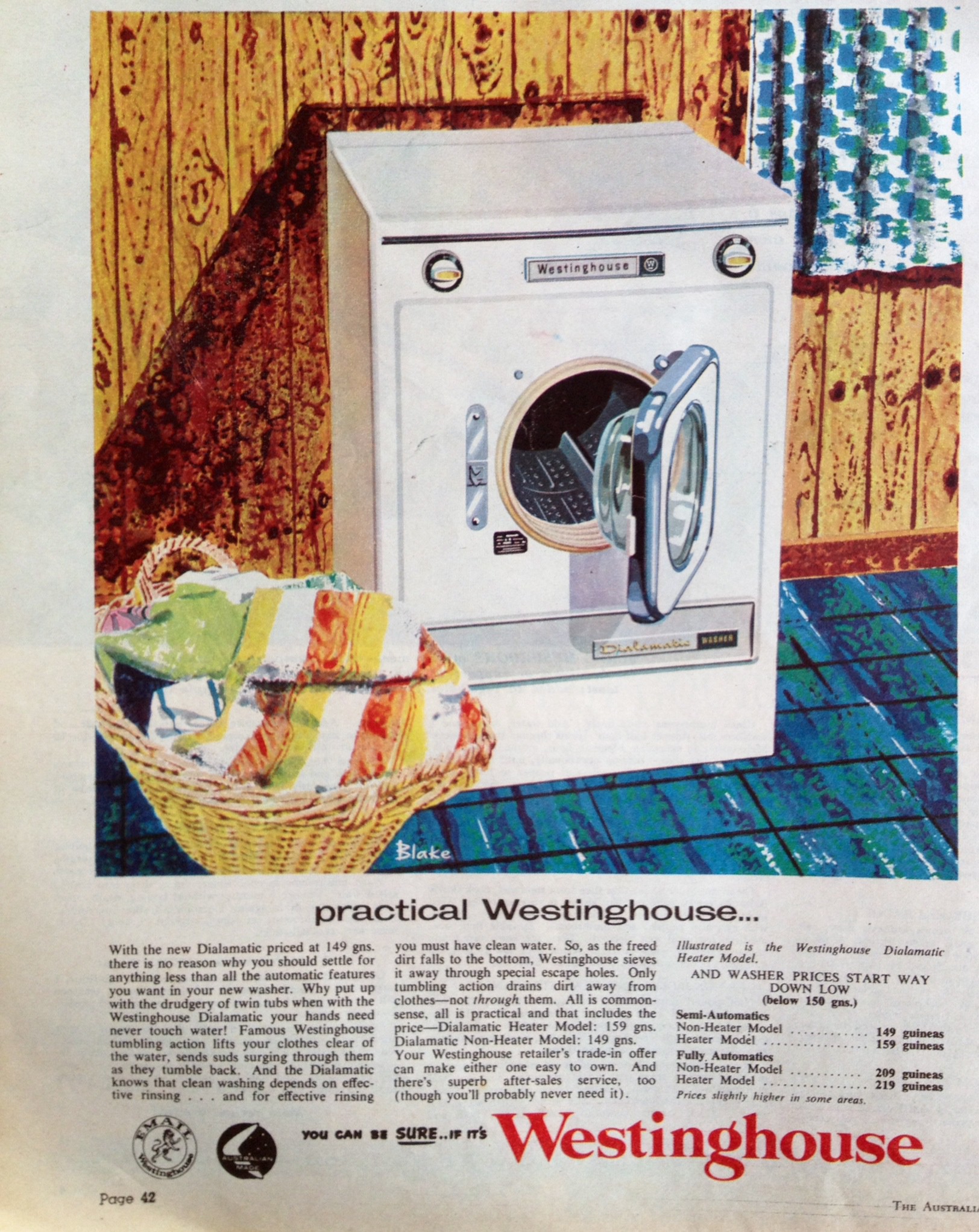
I recently had the opportunity to look back through some Women’s Weekly magazines from the 60s and while I didn’t find that classic image of the proud mother, I did locate two advertisements that were cut from the same cloth. The first one advertises a new washing machine:

washerThe ‘copy’ used is revealing. Lines like “why put up with the drudgery of twin tubs when with the Westinghouse Dialamatic your hands need never touch water!” Now that is an incredibly convincing reason to purchase this shining machine, for sure!

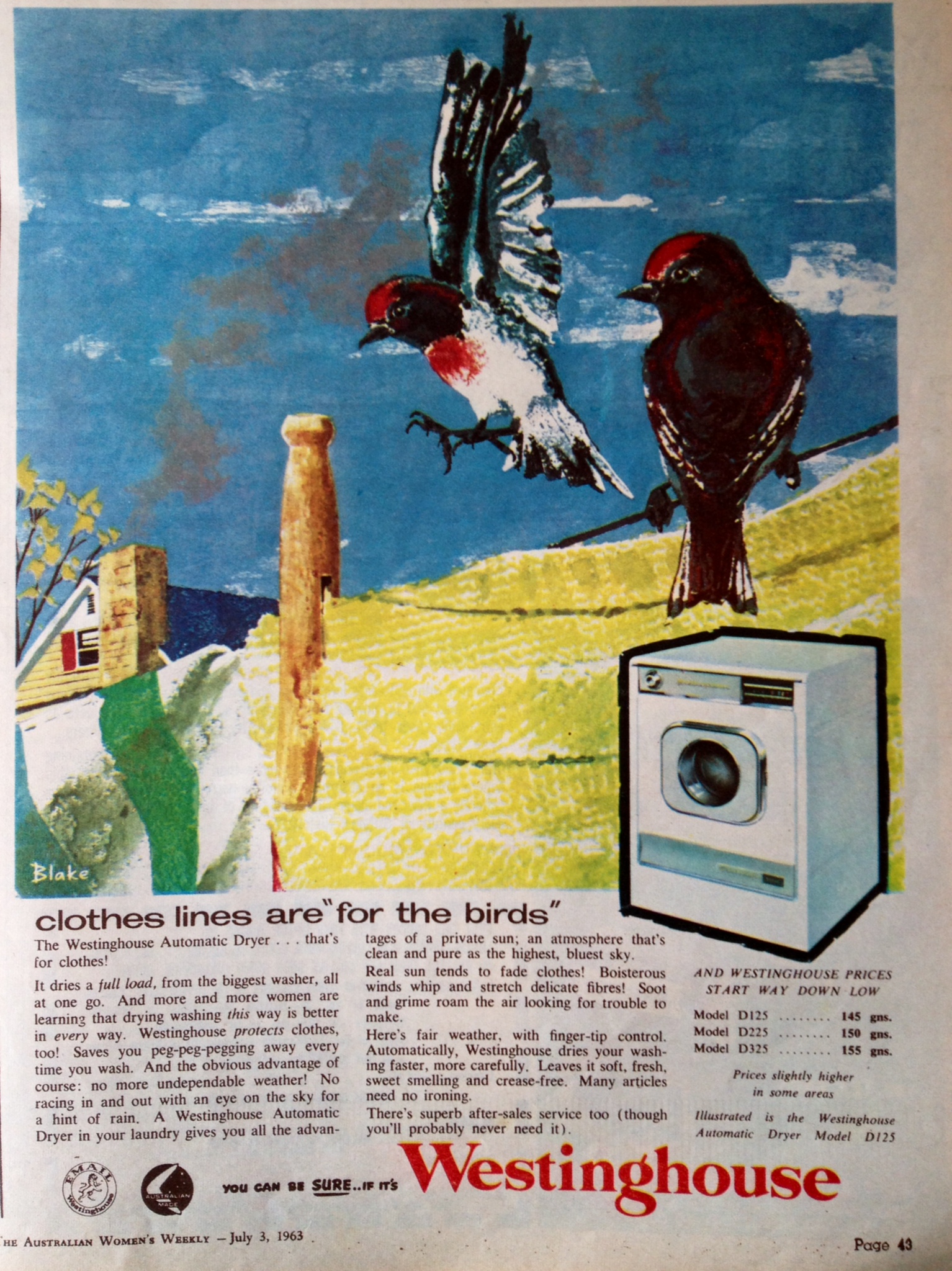
The advertisement for the dryer, on the facing page, follows a similar theme:

dryer

Clothes lines are so, yesterday. Did you know that, more and more women are learning that drying washing in the Westinghouse Automatic dryer is better in every way? And, that it leaves your washing ‘soft, sweet smelling and crease-free’?

I was four years old when these advertisements graced women’s magazines, however my mother would have been the targeted demographic – a young woman in her early thirties, hanging out the washing, caring for her family of three children, due to give birth to her fourth in two months.

In ‘Response Ability’, one of the texts on our book list, the author, Frank Fisher, comments on a similar kind of advertisement, one for mobile phones. He notes that “concern for the safety of our teenage daughters and mothers sells mobile phones… Advertising such as this manipulates fears and therefore demeans the real concerns we have for each other. It corrupts one of the most powerful and human of all our values: care.

I have reflected on this observation ever since and I am suspicious that my ‘love’ of clean clothes and sheets, which felt so much as if it represented how much I care for my family, is more precisely a manipulation of that feeling. While I still enjoy the feel of freshly washed clothes, I now make choices, so that my caring includes caring for the planet. Do I really need to use hot water and scented detergents? Do I need to wash as often? Can I resist collecting up all of our son’s ‘dirty’ clothing, transforming it into sweet smelling, crease-free items in order to express how much I care?

I’m pretty sure my family know how much I love them, and if I asked them, they would tell me that I don’t need to prove it with a pile of neat washing at the end of the bed.

Ruth Williams September 2014


Leave a comment

Just tell me what to buy!

Back to the classroom. One of our set texts was ‘The Conundrum’ by David Owen. The extended title was ‘how scientific innovation, increased efficiency, and good intentions can make our energy and climate problems worse’. It didn’t sound like it would be relaxing bedtime reading however I persevered. 

In the introduction, Owens tells a story of arriving in Melbourne for a conference. He was telling someone in the audience about his theme for the presentation, when the guy interrupted, saying, “Just tell me what to buy!”

I know that feeling. If the lifestyle we are currently living is not sustainable, then just tell me what I need to do to reduce that old ecological footprint of mine!! 

Anthony James, our lecturer, had a multiple choice ‘sustainability quiz’ that we hoped might provide us with ‘the answer’.

He set up three cups and we had to say which cup we thought was the most sustainable option. We were presented with a plastic cup, a paper cup and a china mug. I have added a fourth cup, just to make this a bit more interesting: the KeepCup.

This is an abridged version of the class discussion, which, not surprisingly, went on for a rather lengthy period. 

photo 2

You also won’t be surprised to discover that each option has its pros and cons. 

The china cup, made in England, will last longer than the other alternatives but of course there are issues such as the need for frequent washing, transporting it from one side of the planet to the other and, besides, your favourite barista would probably not welcome you bringing your own mug from home. 

Plastic, while often recyclable, uses up valuable oil and gas resources in the manufacturing process. (The original cup was a Styrofoam cup – they are so much out of favour that I couldn’t find one for the photo shoot. They have a very bad reputation!)  

This paper cup is 100% compostable. (Produced locally in Melbourne by Planet Cup) This is a good option however it still means that the paper has to come from somewhere and energy will be tied up in producing them.

The KeepCup, created by Abigail Forsyth, also from Melbourne, has been so successful that it is now sold in 32 countries. Based on the idea of Forsyth’s daughter’s juice cup, it has clearly caught the imagination of millions of people around the world. And here lies the problem. We can’t stop buying them. In an article from The Age in 2013, when the company were asked to create yet another version, Forsyth responded on their blog,”we are trying to create fewer cups, not more…” In that same article we learn that “since 2009 we have bought 3.5 million cups”. 

Owen asserts that ‘we’re consumers at heart’, and, in my experience, this rings true. I bought a KeepCup but I still haven’t used it – I don’t actually buy takeaway coffee very often – but I just like having one. 

At the end of our session, Anthony declared that trying to work out which is the most sustainable cup is almost an unanswerable question and an analogy for sustainability overall. 

He wanted us to consider these questions before our next class:

Why have we assumed that something is so necessary?

What do we actually need

This last question is my favourite – what do we actually need.  


2 Comments

one ecological footprint at a time

Have you ever completed one of those on-line quizzes where you can find out your ecological footprint?

Are you now asking yourself, what the hell is an ecological footprint?

The WWF defines it as ‘the measure of the impact humans have on their environment’. Here in Australia, it is noted that “we are consuming more than three times our fair share of the planet’s resources.”

Let’s just sit with that for a while.

In our second workshop for the Swinburne course we were asked to take the quiz on the WWF website and share our results with the class. This is not the kind of information that I felt comfortable sharing, especially in a classroom full of people who were obviously into living sustainably. (Why else would they be doing this course?) I just hoped I didn’t have to go first.

Fortunately I hadn’t taken the seat at the end of the row and even more fortunately, my result, thought not as ‘good’ as some, was ‘better’ than others. (Since when did such a thing become a competition!)

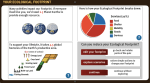
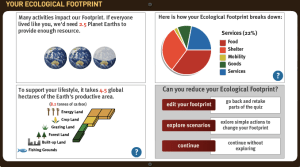
ecological footprint

Pretty much everyone in the class was surprised by their results; even for members of the class who were vegan and only rode bicycles etc. It didn’t seem that anyone was living within the limits of the planet. One of the complicating factors in Victoria is that our electricity is created from burning coal, which means the majority of us will automatically have a bigger footprint.

Your homework for this week is to check out your own ecological footprint. I have chosen the WWF version because it is user-friendly and even a little entertaining.

http://www.wwf.org.au/our_work/people_and_the_environment/human_footprint/footprint_calculator/

There are those who don’t think much of the whole idea and others who think there are better methods. You are encouraged to ignore such folks, just for the purpose of this exercise.

Feel free to share your results with us. Or keep it to yourself. You might be relieved or shocked. You might wish you’d never done it or feel pleased to have somewhere from which to begin to make changes.

One step at a time.


3 Comments

One step at a time

A year ago I enrolled in the Vocational Graduate Certificate of Sustainability at Swinburne University. This was not part of my twenty year plan. Not that I have one, but if I did, it would not involve going back to study and especially not studying something as seemingly ‘dry’ as sustainability.

Initially I had a long list of reasons for not being able to do the course: it would cost too much, I don’t have enough time etc. The universe was one step ahead – somehow each of my concerns were addressed. Not only was the course subsidised by the government, for the most part it was delivered on-line and, the contact days were on Tuesdays, meaning it did not cut into our trips to the farm. So I signed up.

I now feel incredibly fortunate for having been given the opportunity to do this course. I have learnt so much about what it means to live sustainably. One of the first things I learnt was that it is not just about buying more efficient light globes and installing insulation. The other thing I have learnt is that every little change we make matters. At first glance, these two lessons may seem contradictory. I soon came to the conclusion that it has a lot to do with living consciously and to acknowledge the way that everything is connected.

For the last twelve months I have been looking at where I can make changes towards living a more sustainable life. It has not been easy. I was not prepared for the ability of my mind to resist change. Any change – big or small.

For the next twelve months I would like to share with you my wins and my losses in this ‘journey’.

A stitch in time saves nine and a change in time?

Who knows what could be saved, it’s worth taking that first step.